Drava Art Biennale 2025
Ecofeminism
Ivana Biočina, Stela Brkanić, Lučka Centa, Tanja Dabo, Gail Hocking, Iva Korbar, Mirna Kutleša, Pei-Han Lin, Ivica Malčić, Ivan Midžić, Lea Mioković, Keiko Miyazaki, Ivana Papić, Kristina Pongrac, Ana Ratković Sobota, Ivana Tkalčić, Ana Vivoda, Leo Vukelić
“As we stand today on the brink of destroying the natural world that sustains us, let us have the courage not only to shift to sustainable technologies, but to change the way we view this world and ourselves.” (Susan Griffin)
Seeking to connect artists, galleries, museums, and other institutions in cities along the Drava River and in the wider Pannonian region, the Koprivnica Town Museum developed the idea for an exhibition showcasing the artistic production of the youngest generation. Between 2003 and 2007, it organised the Drava Art Annale Koprivnica (DAAK) group exhibition featuring artists from Central Europe, who addressed the issues of sustainable development and the attempts at water privatisation in their artistic practice. This is the spirit behind the Drava Art Biennale – a group exhibition presenting contemporary works by artists who engage with ecological issues across a range of media and perspectives.
This year’s DAB recognizes the concept and meaning of ecofeminism as essential for understanding and reflecting on the issue of water, and therefore as a natural “upgrade” to previous editions. Inspired, by the work and research of Susan Griffin, we invited artists to question the Western cultural paradigm that attempts to erase the memory of our earliest interactions with the natural world, as well as their meaning. The exhibition presents 18 artists with 18 diverse approaches, understandings and interpretations.
“The term ecofeminism was first used by French theorist Françoise d’Eaubonne in 1974 to present women’s potential to encourage an ecological revolution that would ensure humanity’s survival on the planet. Such an ecological revolution would establish new gender relations between men and women, as well as new relations between humanity and the Earth.”[1] The foundations of ecofeminism lie in opposing hierarchical binary divisions (culture – nature, male – female, civilized – primitive, human – animal) that very often justify the domination and violence of one group over another, and these foundations are built by insisting on the unity of the living and non-living world.
Ecofeminism seeks to combine activist work, political engagement, scientific and theoretical research, and finds its meaning and purpose only if it is located – in between – at a place of interpenetration and encounter. The contemporary world lacks a practical and embodied understanding of the inextricable connection between humans and all other (life) forms on earth. The exploitation of nature, including water resources, has been a theme of ecofeminist artistic practice since its very beginning (the 1960s). Ecofeminism thus opens up space for the reinterpretation of artistic practices, especially those that address nature, the body, the environment, spirituality and the relationship to the earth.
Drava Art Biennale seeks to remind us of the urgent need to return to the core and essence – with less hierarchy, more collaboration, shared responsibility and interconnectedness. Some of the key motifs and strategies of ecofeminism include performativity, often using a human body part as a landscape; the use of organic materials such as earth, water or textiles; the archiving of women’s knowledge through the connection of traditionally female practices (e.g. handicrafts) with resistance to the modern technocratic view of nature; rituality, spirituality and procedurality through the exploration of myths, archetypes, cyclical time in contrast to linear narratives of constant growth, progress and continuous exploitation. These are just some of the topics presented that open up space for reflection on the necessary changes in terms of water conservation and the entire ecosystem conservation, a view that at its core has respect and equality of all forms of life, coexistence and reciprocity of nature and human beings.
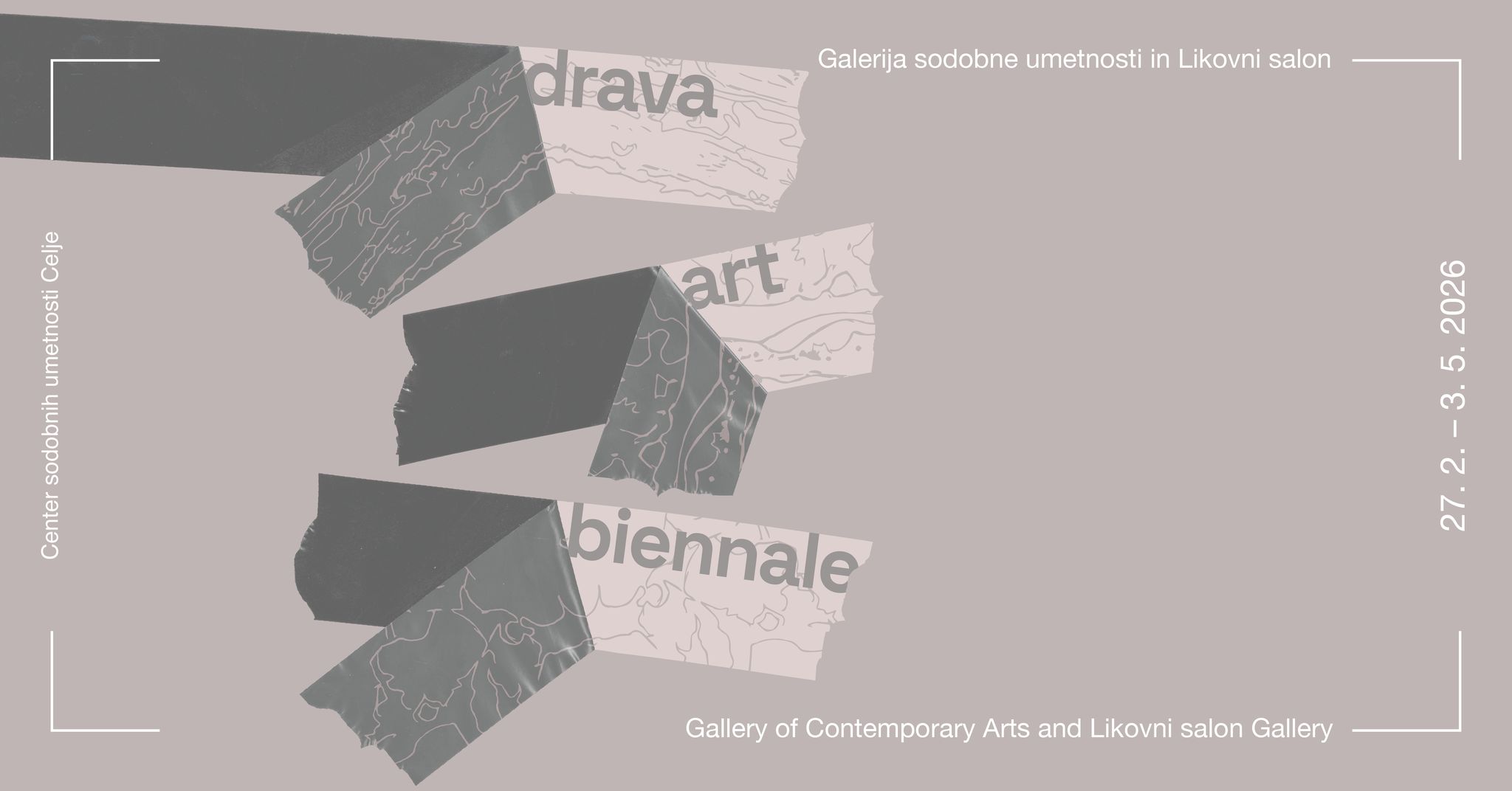
The DAB ’25 exhibition premiered at the Koprivnica Gallery, and in the year 2026 year it will move to partner institutions: the Art Gallery of the City of Slavonski Brod, and the Center for Contemporary Arts in Celje.
Text: Helena Kušenić
Selection of works: Maja Hodošček, Helena Kušenić, Ana Kovačić, Valentina Radoš, Romana Tekić
Visual design: Luna Šaban in Tea Pokas (Sveučilište Sjever), Neža Penca
Partners of the project: Atelieri Koprivnica, Galerija umjetnina grada Slavonskog broda, Muzej Grada Koprivnica, Muzej likovnih umjetnosti Osijek, Pokrajinski muzej Celje – Center sodobnih umetnosti
Support: Mestna občina Celje, Ministrstvo za kulturo in medije Republike Hrvaške
[1] MERCHANT, Carolyn: Ecofeminism and feminist theory. // Ecofeminism: Between Women’s and Green Studies (editor. Goran Đurđević and Suzana Marjanić). Zagreb: Durieux, 2020., 9.
